Frequently Asked Questions
FAQ
Are you looking for Hookah Training?
- What does the word, "hookah" mean and why is it used?
- What exactly is the concept of SSA?
- How long will the engines run?
- Do the motors require an oil gas mix?
- Are the compressors oil lubricated?
- What keeps exhaust fumes out of the breathing air?
- What depths can I reasonably expect on an Air Line?
- What length are the hoses?
- Won't a salty environment cause the equipment to rust?
- Is training needed?
- If the engine runs out of gas, what happens?
- Are the floating models stable when the sea gets choppy?
- Do the floats tow easily?
- How much separation can I expect on the Air Line's individual 60 foot hoses compared to a single down hose with individual 20 foot whips?
- Is there any advantage of having a single down hose?
- What then, are the advantages to individual hoses?

What does the word, “hookah” mean and why is it used?
The word, “hookah” is Turkish. Over 500 years ago the Turks devised a way of cooling smoking tobacco by inserting the tobacco bowl into a water jug. They attached flexible hoses to the bowl using pitch to seal it. The hoses, being partially submerged in the water, cooled the smoke as it was inhaled by the smokers. It was a common way for men to socialize, and many decisions, including life-and-death ones, were made during a hookah experience.
Hookah smoking eventually found popularity throughout the entire Middle East, where it is still practiced, socially, in homes and in cafes.
The word is sometimes, erroneously, credited to the Arabs thanks to the 1940’s Hollywood, B movies that showed a bunch of Arabian sheiks sitting in a tent smoking.
During the late 1800’s, divers, from Greece were employed to harvest sponges while wearing copper hard hats with air hoses going to the surface. Manual and, ultimately, electric and fuel driven pumps, provided air to the divers below. The Greeks, historically, also had experience with hookah smoking, as Greece is a neighbor of Turkey and the similarity of a gas (air) passing through cooling waters didn’t go unnoticed.
The hookah diving system was born and the name still sticks.
What exactly is the concept of SSA?
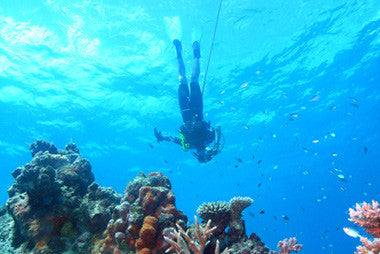
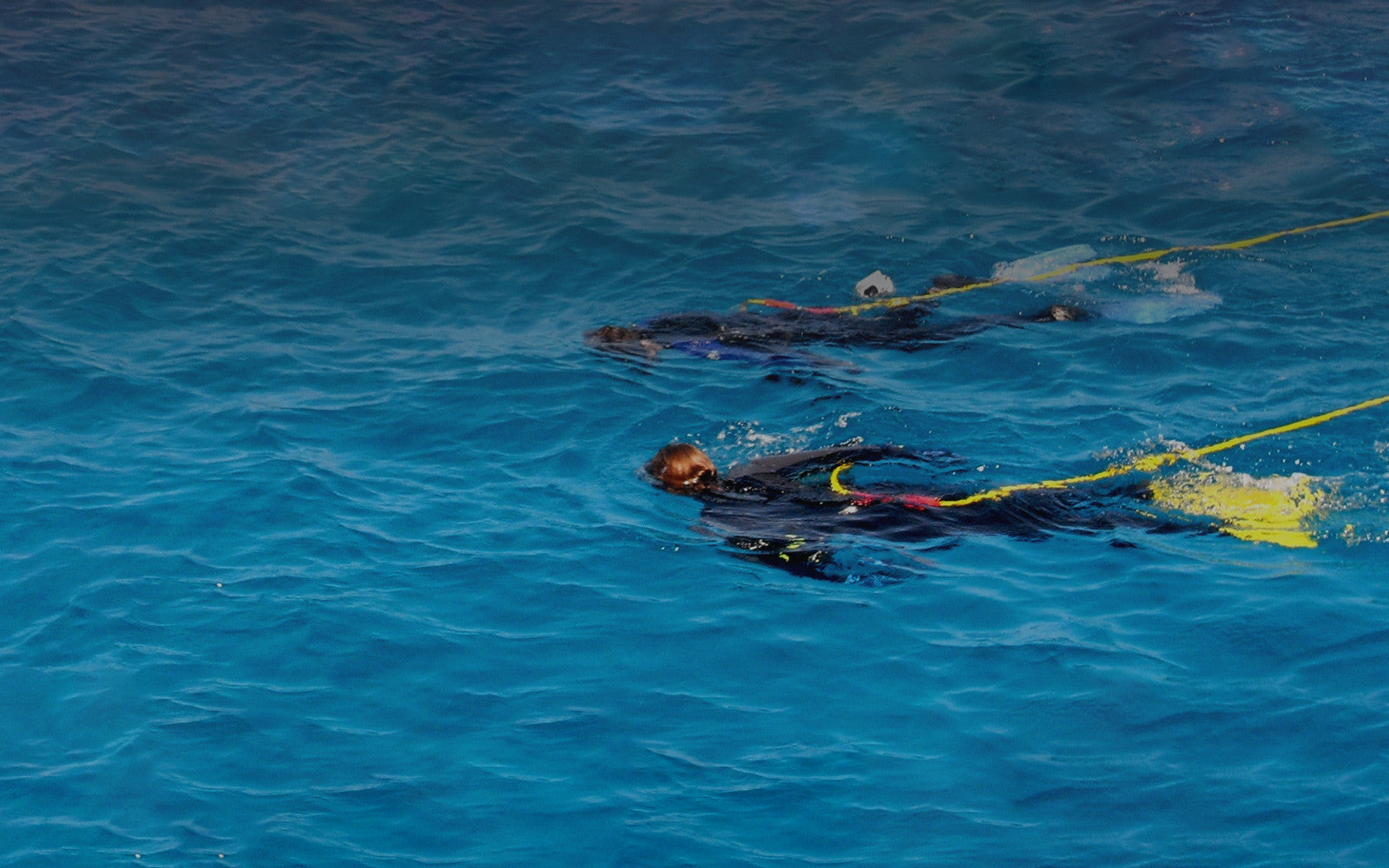
Air from a low-pressure compressor at the surface pumps air through a hose and demand second stage regulator system directly to the divers below. Virtually no gear is worn and the divers have a lifeline to the surface with the hose system and a belt that secures the hose and regulator to the body.
How long will the Honda engines run?
Running time on the floating or deck gas-powered models will be 3 hours on 2.5 quarts (2.4 l) gas, regardless of the number of divers on the system.
Do the motors require an oil gas mix?
No. They are four-cycle engines and take unleaded gas with a pump octane rating of 86 or above.
Are the compressors oil lubricated?
No. A Teflon cup on an aluminum piston pulsates inside the aluminum cylinder sleeve precluding the need for even rings and seals. Bearings are sealed and grease cannot enter the breathing system.
What keeps exhaust fumes out of the breathing air on the Honda gas powered systems?
A vertical snorkel draws air in 30 inches above the compressor. Exhaust is shot away horizontally on the opposite side. The way the unit floats, the exhaust will always seek the down wind position. The deck versions have a 10 foot (3 m) air intake hose to allow the air intake point to be placed high up away from the dive compressor if the compressor is placed in an area with restricted air flow around the compressor (e.g., inside the gunwales of a boat). All Air Line system designs meet or exceed Compressed Gas Association Grade E breathing air standards.
What depths can I reasonably expect on an Air Line?
The XL models will support two to a depth of 85 feet, three to 60 feet, or four to 40 feet. The R-4 models will support two divers to 70 feet, or three to 40 feet. The systems are primarily designed for second atmosphere, recreational diving. (Be wary of claims. In our opinion, some manufacturers may exaggerate depth ratings for the air output of their systems. The Air Line chooses to be conservative, basing our depth ratings on people with average diving experience and in average physical condition. The depth capability of a compressor system will be determined by the air output of the compressor. Compare air output flow volumes.)
What length are the hoses?
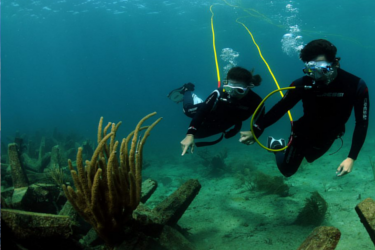
They are all arbitrarily 60 feet on most models, because we have found this to be an optimal length for common hookah dive profiles. Hose extensions are available for lengthening hoses if desired. We will, however, customize lengths for certain applications such as deck mounting. It is important to understand that each diver has an independent 60 foot down line on an Air Line instead of a single down line. You will get more air volume under pressure in two, three or four hoses than you will through one; Common-Sense 101. There are safety factors involved also. We can discuss these through e-mail or a telephone call.
Won't a salty environment cause the equipment to rust?
It would without a few simple care procedures. The gas-powered compressors are marinized and require no pre-dive procedures. The engines need a bit more attention. When new, thoroughly coat with a marine protectant, such as, Boeshield T-9. After the dive day, a fresh water bath will rinse away accumulated salt, followed by a light touch-up of the protectant.
Is training needed?
Yes. Knowledge of the pertinent laws of physics is essential. Although easier to use as less gear is worn, you are still subject to the same physical laws that relate to scuba diving. A scuba diving course or surface supplied air diving course will provide the appropriate training. BCDs are not discouraged but they are not as critical, as the weight of air in a scuba cylinder is not being consumed, so diver buoyancy remains relatively constant. Snorkel vests are an option but remember, you are connected to the surface float through the hose system.
If the engine runs out of gas, what happens?
You are encouraged to come up. Silliness aside, you will be aware when the engine stops as each succeeding breath will require slightly more effort. The air in the hoses is under pressure and supplies a small reservoir of air. As you may know, the air in the hoses will naturally increase in volume (i.e., expand) as you rise, so there will be a few more breaths in the hoses. However, The Air Line recommends that the divers carry an independent, back-up air supply (such as a Spare Air, see our Accessories page) whether diving on surface supplied air or scuba tanks.
Are the floating models stable when the sea gets choppy?
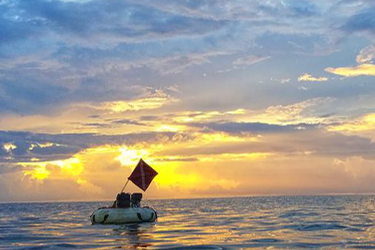
Yes, but three or four footers are the suggested maximum. when you feel a surge on the hose you will know it's time to call it a day, or at least, go to the surface to evaluate the situation.
Do the floats tow easily?
Yes. The divers being free of gear experience the freedom of snorkelers. Otherwise, the hoses being under pressure will arch gracefully down so the floats are not being pulled awkwardly. The task of towing is shared by at least two anyway. They should never be towed behind a boat except at slow idle.
How much separation can I expect on the Air Line's individual 60 foot hoses compared to a single down hose with individual 20 foot whips?

**The chart indicates what you can expect in separation and freedom, at depth, by using individual hoses. For instance: At 2nd atmosphere (33 feet) you would be able to explore up to 109 feet apart.
At any depth, on a system with only a single down hose, your separation would always be just 40 feet. **
Is there any advantage of having a single down hose?
It might look like a cleaner configuration for pictures, but is that what you're buying it for? (Excuse the answering of a question with a question) (Also it's less expensive to provide only one hose.)
What then, are the advantages to the Air Line's individual hoses?
- Simple, common sense physics to start. You will have more breathable air volume in multiple hoses than in one hose.
- The aforementioned separation (13.Q.), which equates to freedom (See, also, next answer).
- Imagine being at a depth of say 60 feet around some coral, wreck or rock formations. With the floating, individual hoses you can easily maneuver about unobstructed. On the one down hose at 60 feet, the 20 foot whips will be effectively horizontal, restricting movement to follow-the-leader.
- Let's talk SAFETY! At 60 feet on individual hoses, if one diver needs to reach the surface for any reason, he/she can calmly do so, hand-over-hand to the security of the float or boat. On the single hose, the stressed diver can only ascend 40 feet, the total of the two 20 foot whips. At that point he/she would have to jettison the towing belt, with the regulator, and swim the remaining 20 feet to the surface.
- More on SAFETY. In the event of equipment failure, there will be a small reserve of air trapped in the hoses. There will be more air volume stored under pressure in multiple individual diver hoses than in a single down hose. On the single down hose, all divers must share the air from the one hose. (Note: The Air Line recommends carrying an independent backup air supply, like Spare Air, for all divers, whether on hookah or scuba equipment.)
Follow

Sign up to receive emails from Air Line by J Sink
© 2026
The Air Link by J Sink. All rights reserved.